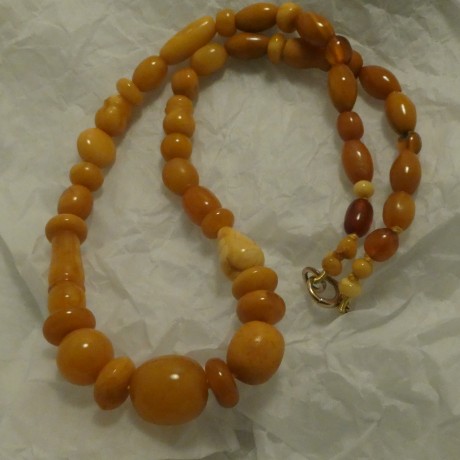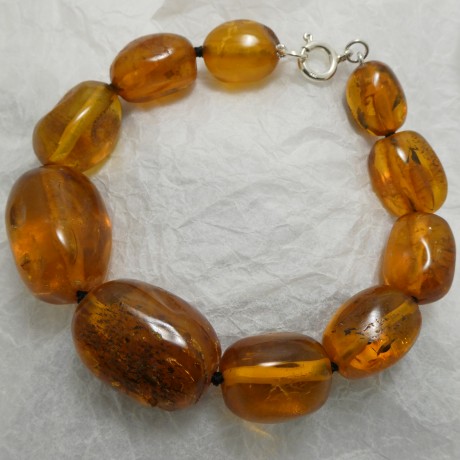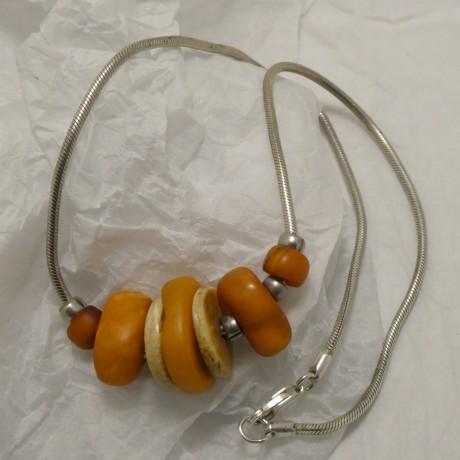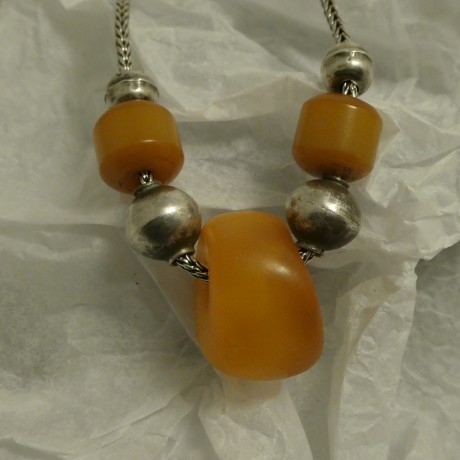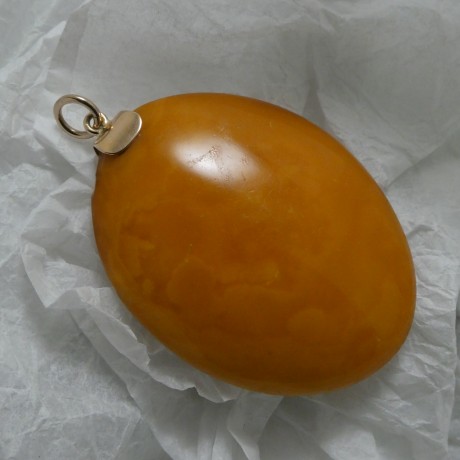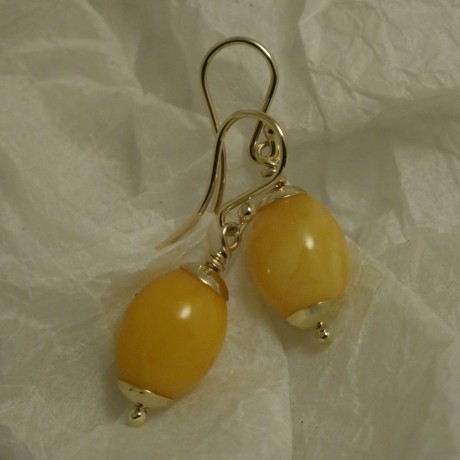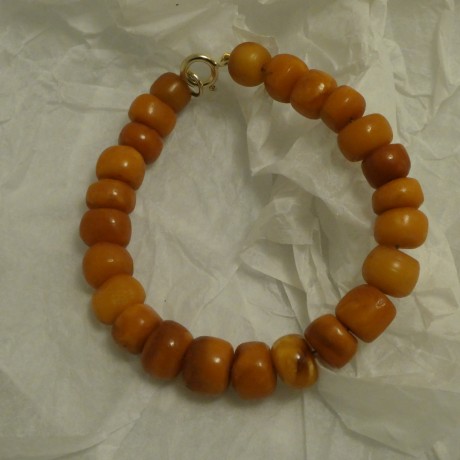
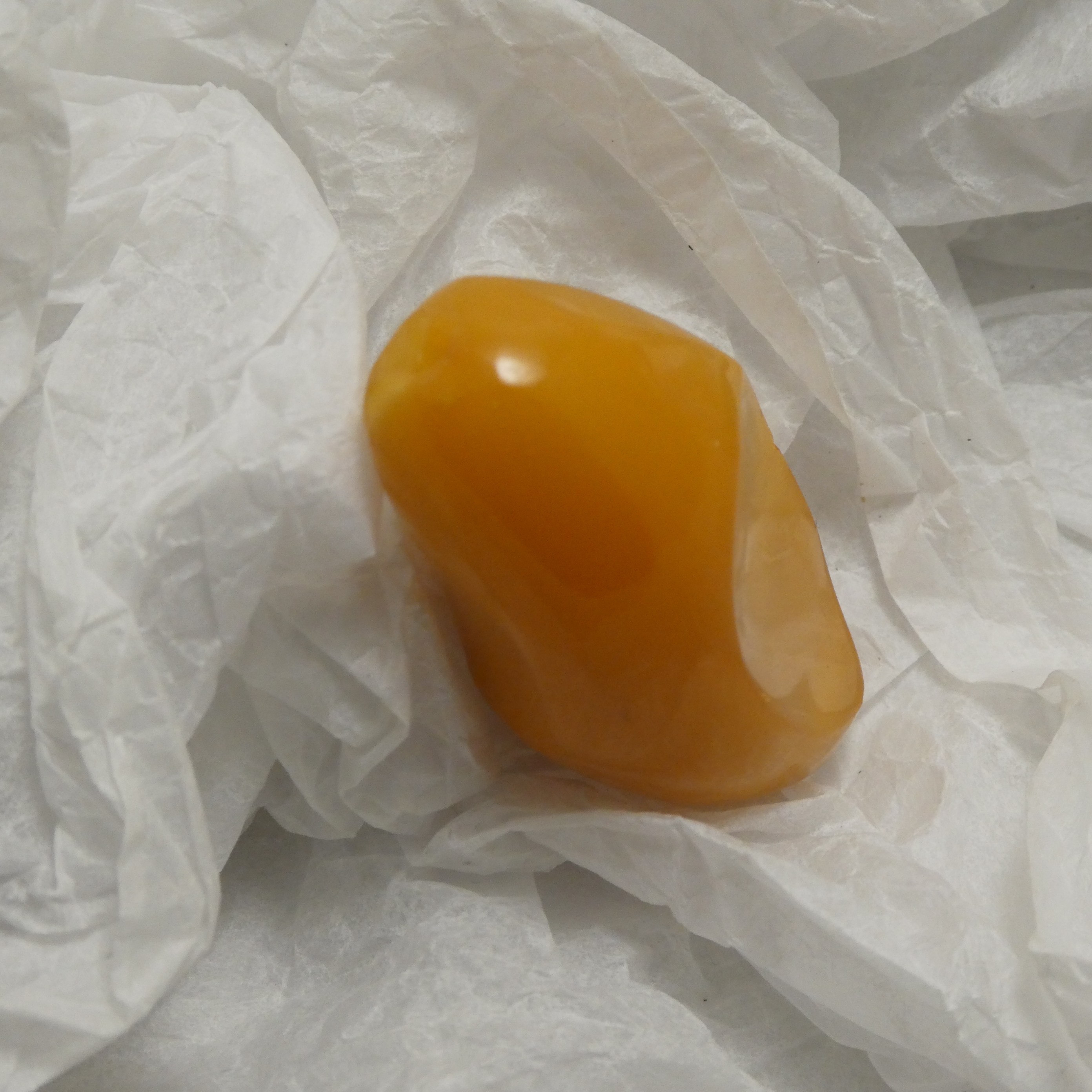
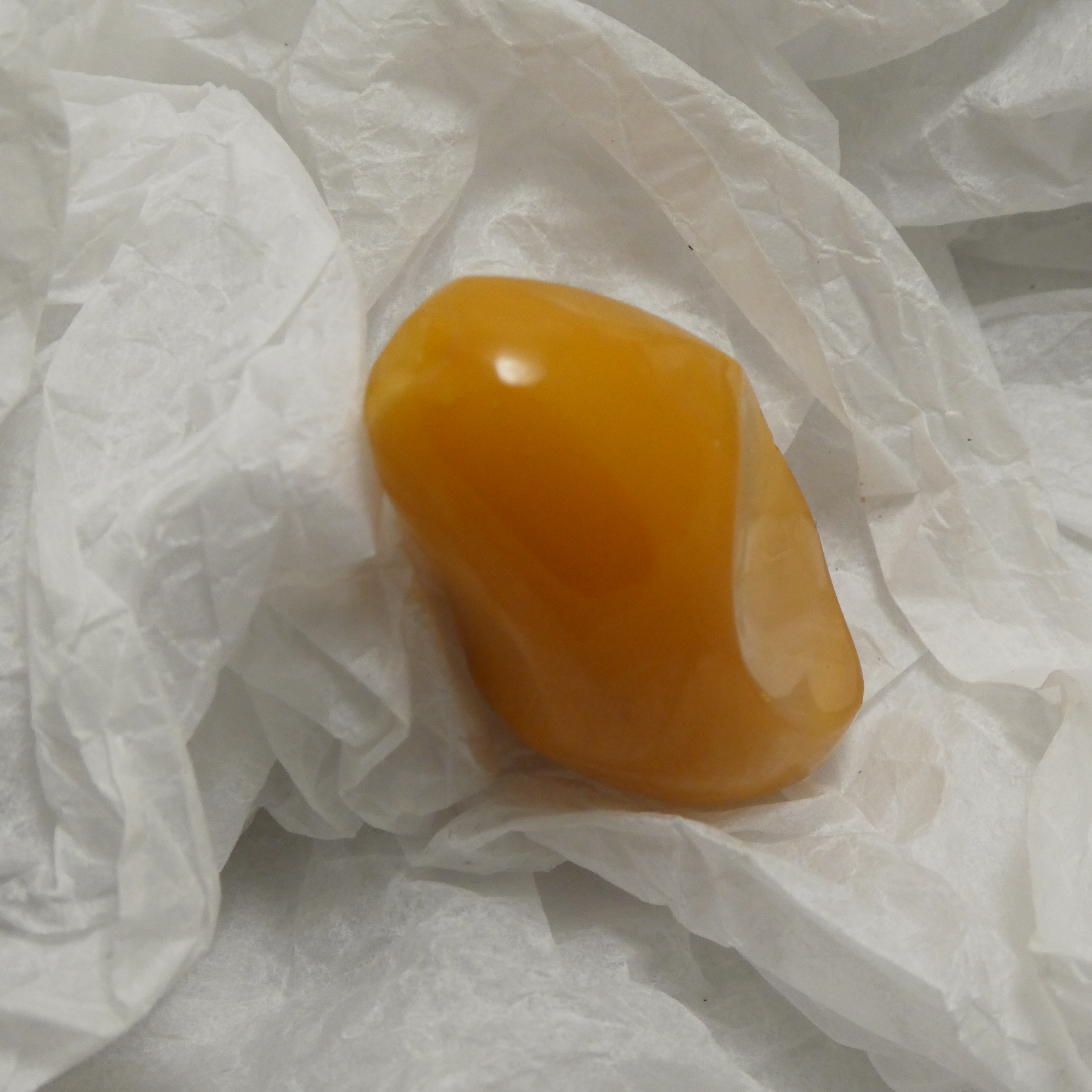
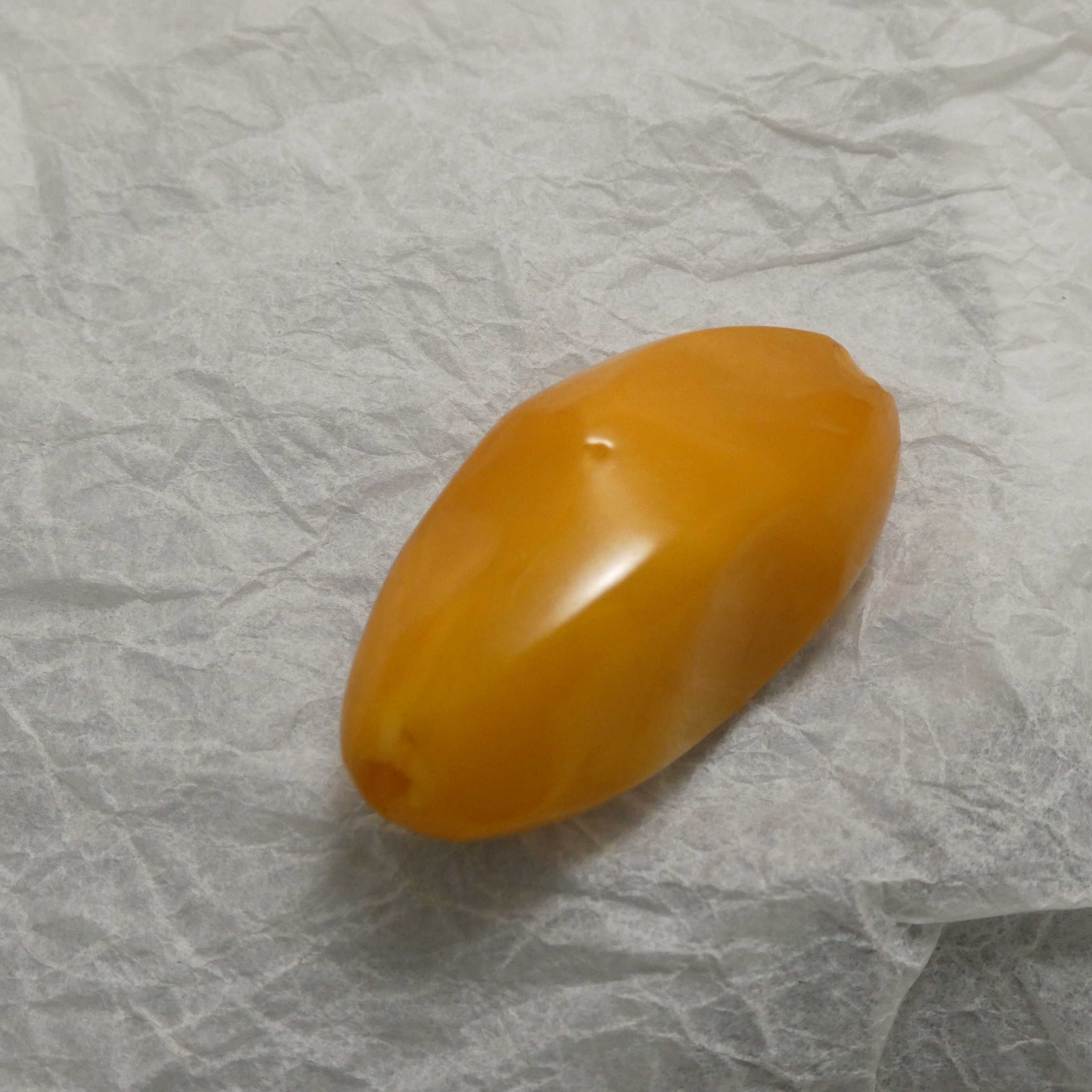
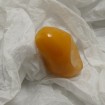
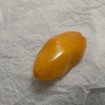
Single Amber bead of Baltic origin, old, with a lovely patina of wear and use. Its natural butterscotch colour is very fine indeed. The irregular scooped facets in the elliptical form indicate relative modernity -1950s/1960s- and Northern European fashioning, probably in Poland. The largest scooped facet is perfectly formed for rubbing with the inside of the thumb and any gentleman in Beirut, when that city was known as the Venice of the East, would have been pleased with it hanging from the tassled end of his personal Amber meditation beads. (The above Single Amber bead was purchased recently in southern England from a dealer in Continental European collectables; it was probably the largest, or one of the largest, beads of a necklace of such lovely stuff, long gone.)
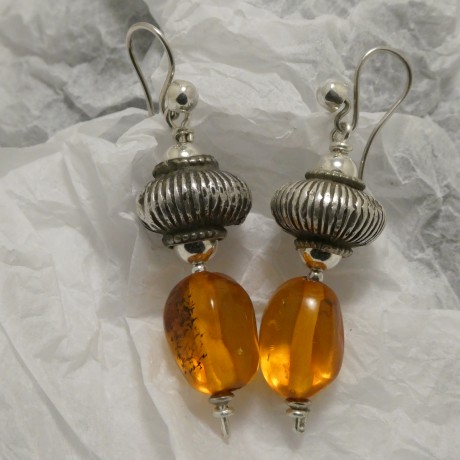
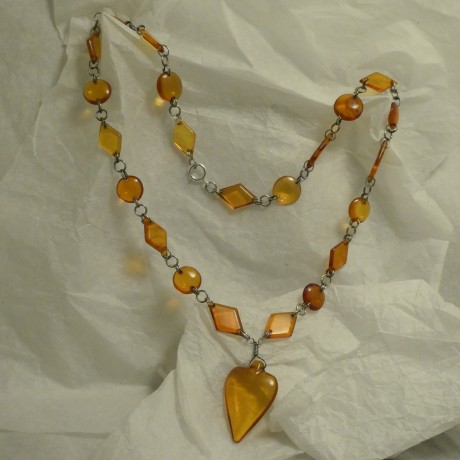
The Baltic Sea region is and historically always has been one of the great world sources for Amber, and has always presented both the more translucent honey-coloured material and the opaque yellow or butterscotch of the above bead, and while the honey-coloured Amber has a few world sources, only the Baltic region produces the butterscotch.