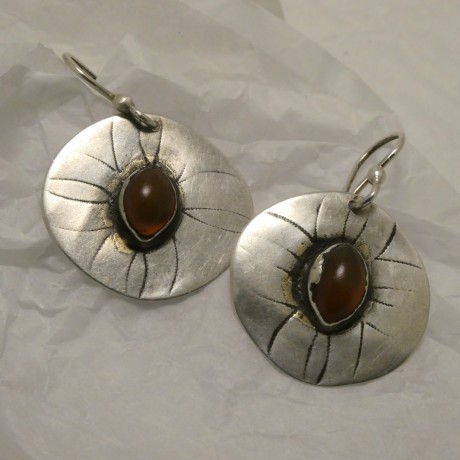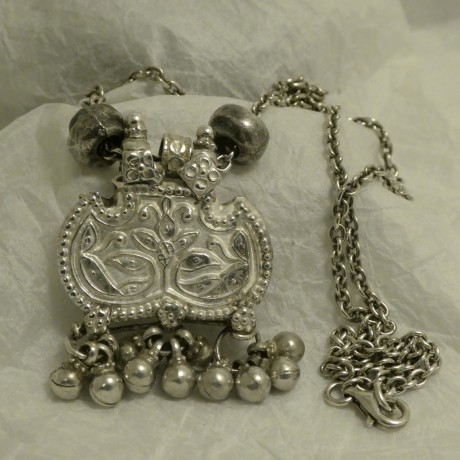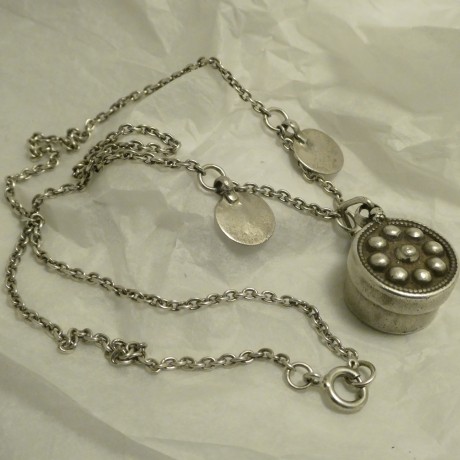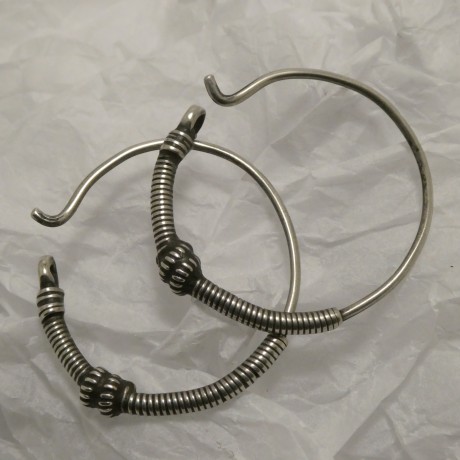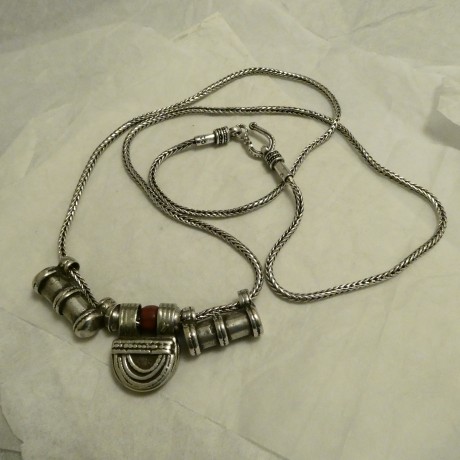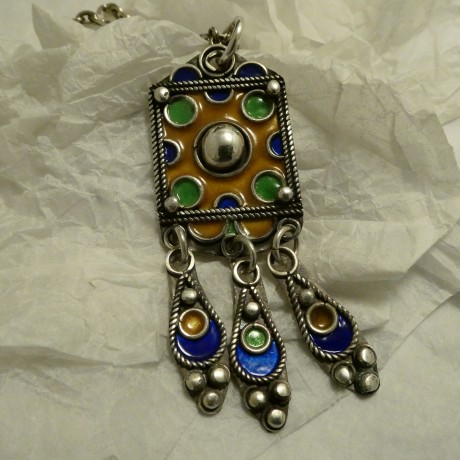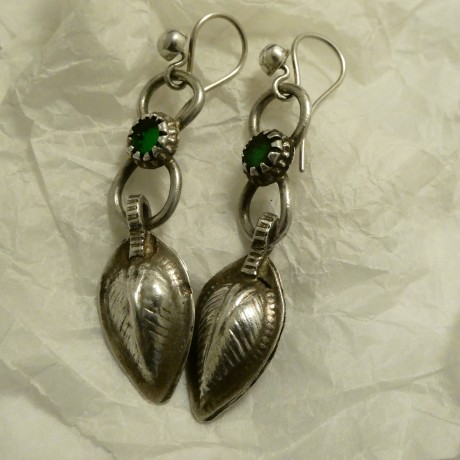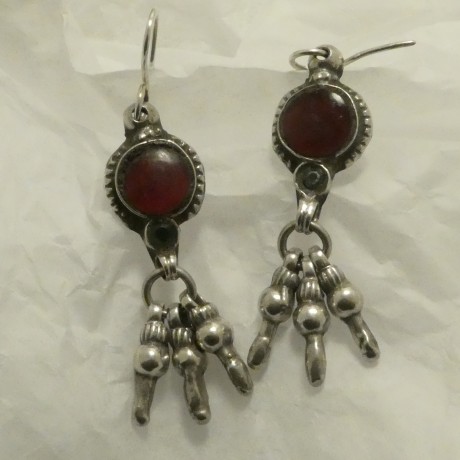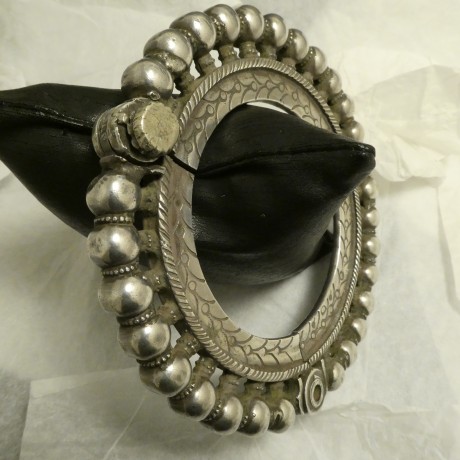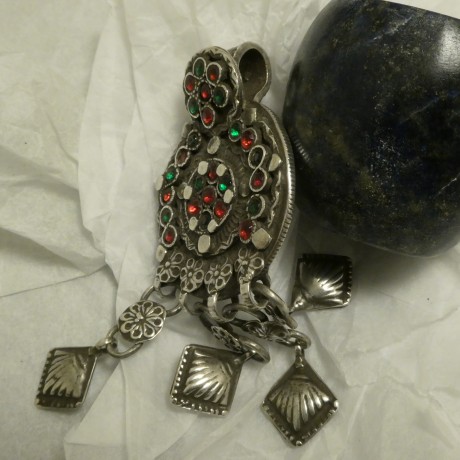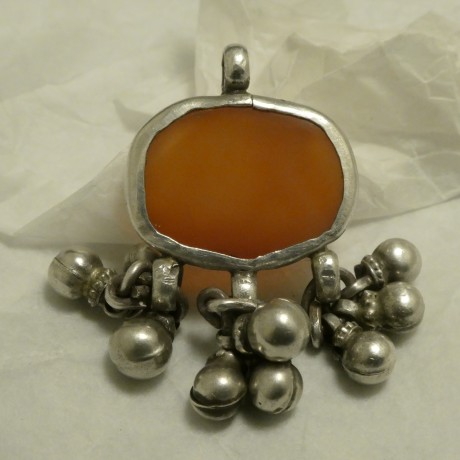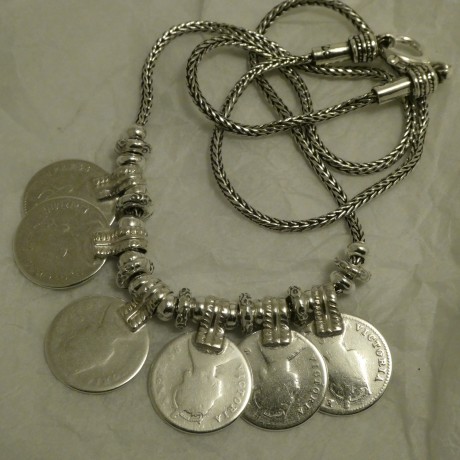
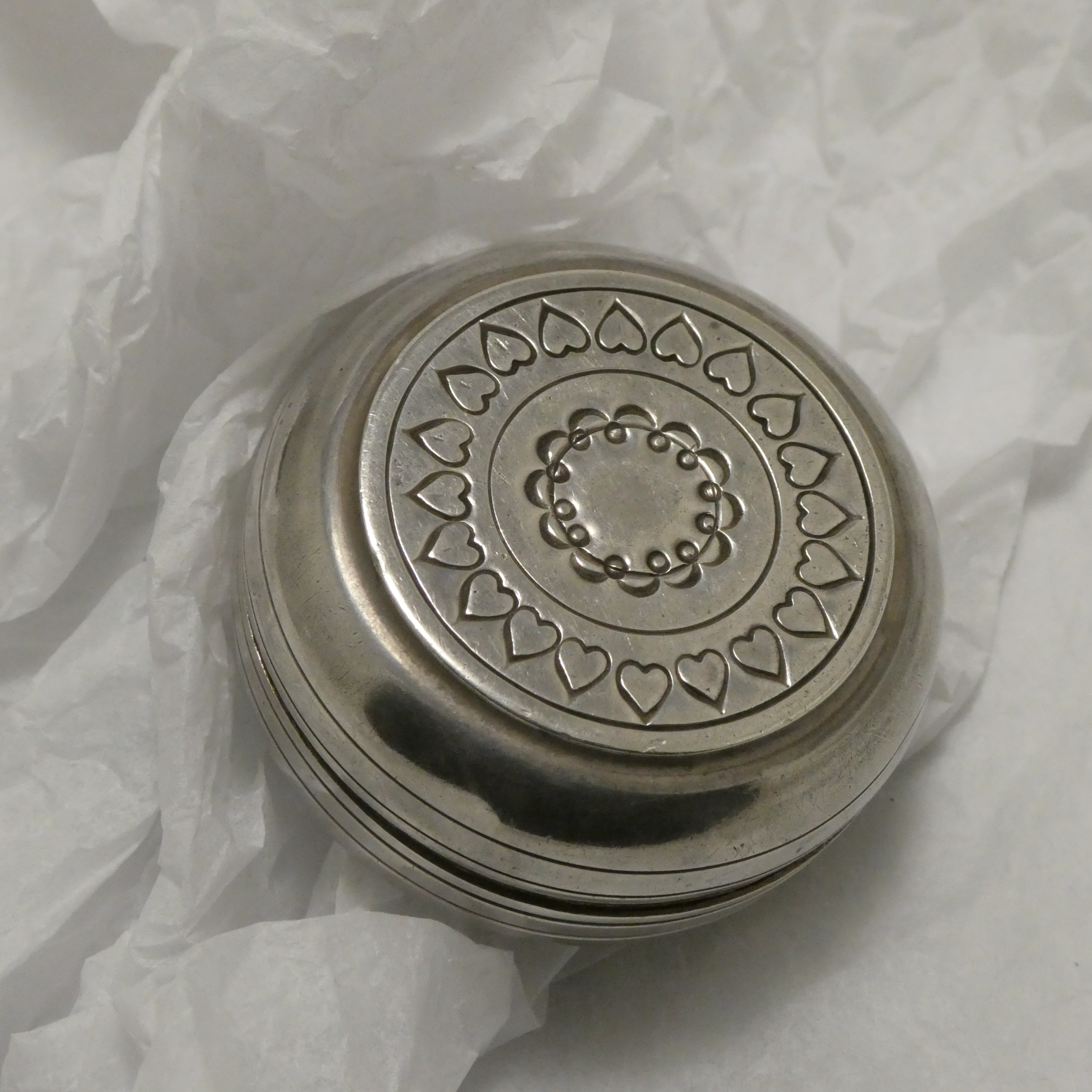
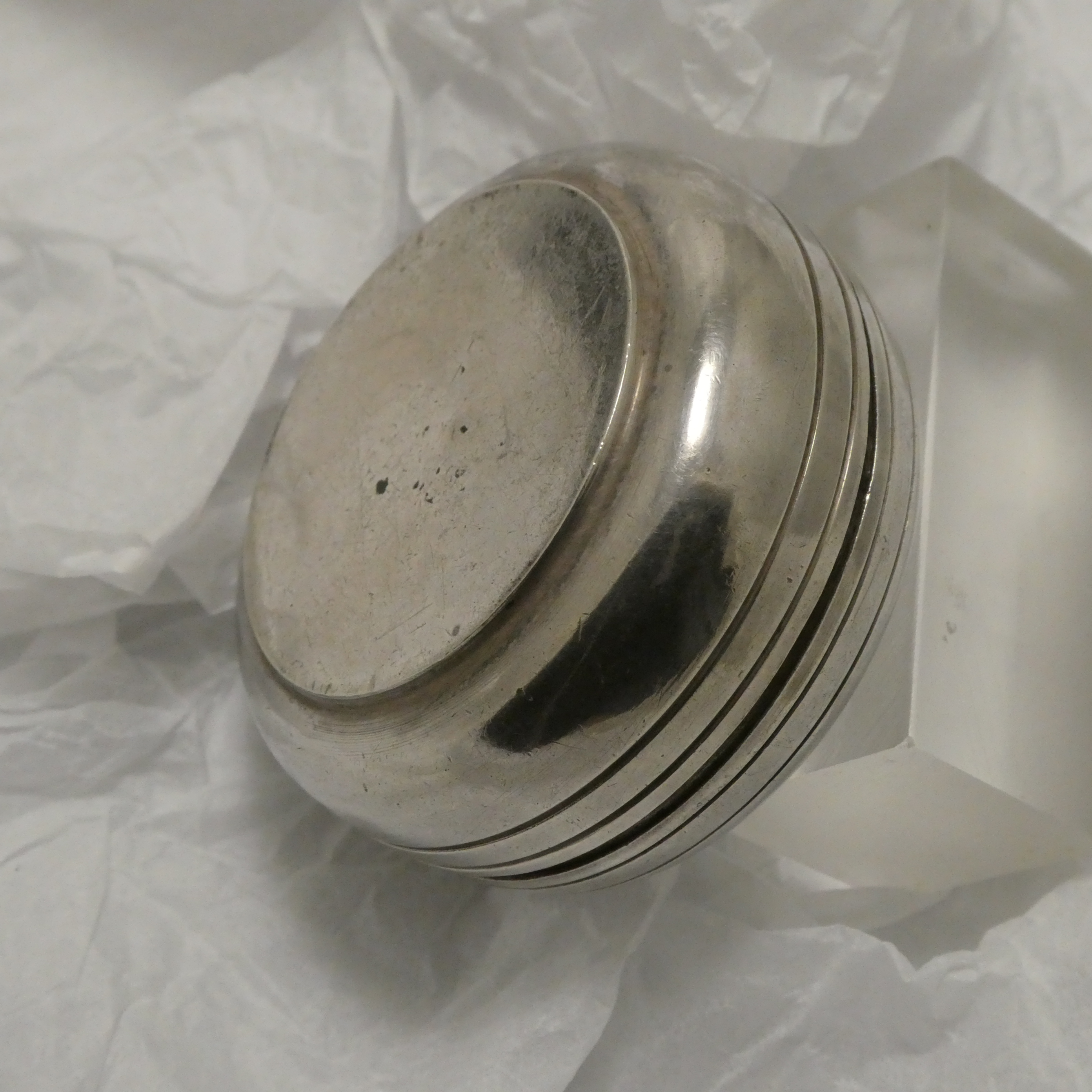
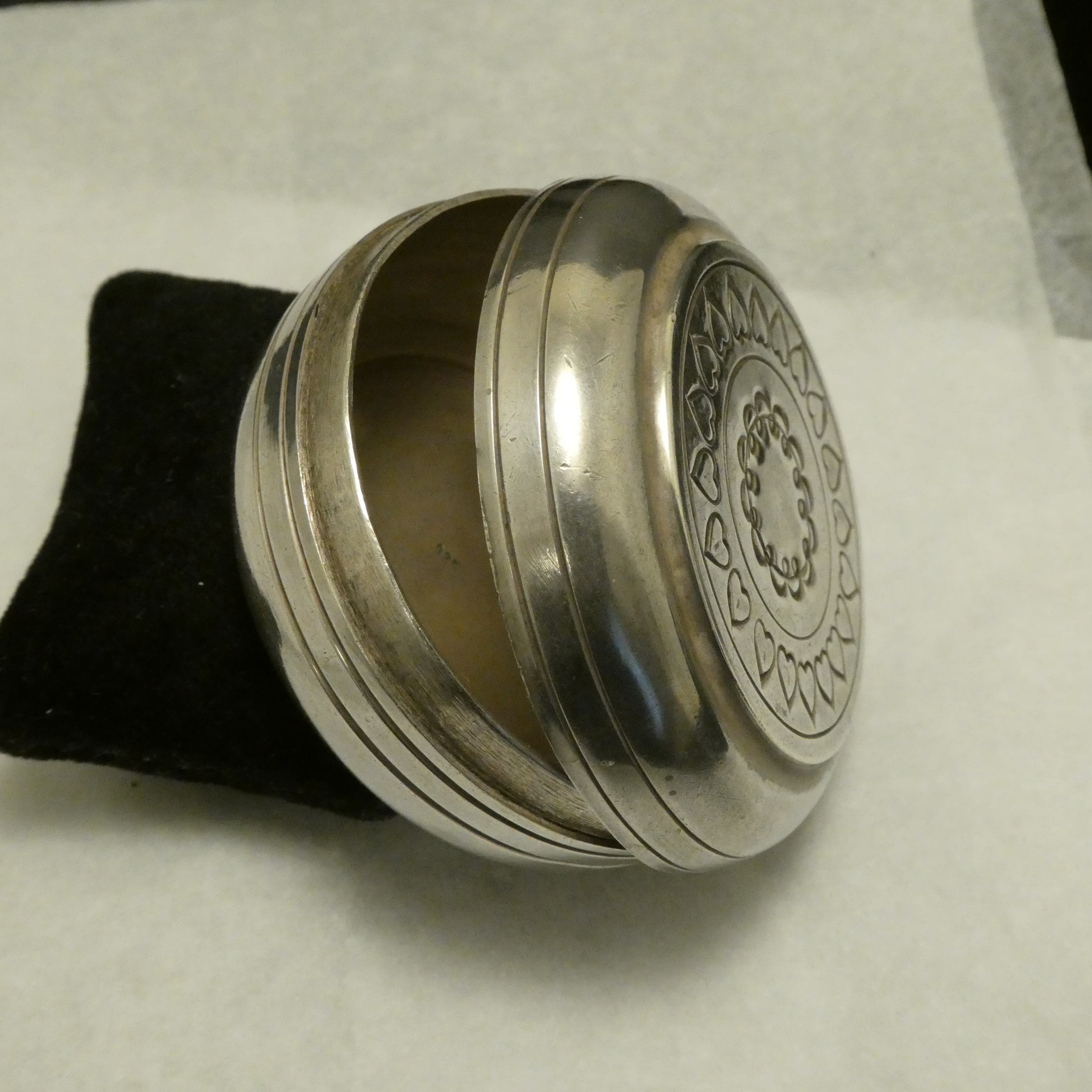
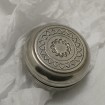
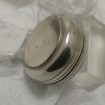
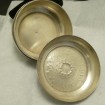
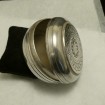
Silver Container, hand-worked in the Silver bazar of Chandni Chowk in Old Delhi, around 1985, crafted in coin Silver, out of old Silver Rupee coins simply melted down.
From the first British East India Company mints in India of Rupee coinage in the mid 1800s, the 91.6% Silver content of the previous Mughal Silver coinage was followed, scrupulously, so that everywhere on the sub-continent the exact value of the Silver coinage was a known; even the exact weight of the British-controlled Silver Rupee was a tolah, as was the previous Mughal Silver Rupee. For the Tribals of India this coinage was one of the three staples of prestige, the other two being property and livestock.
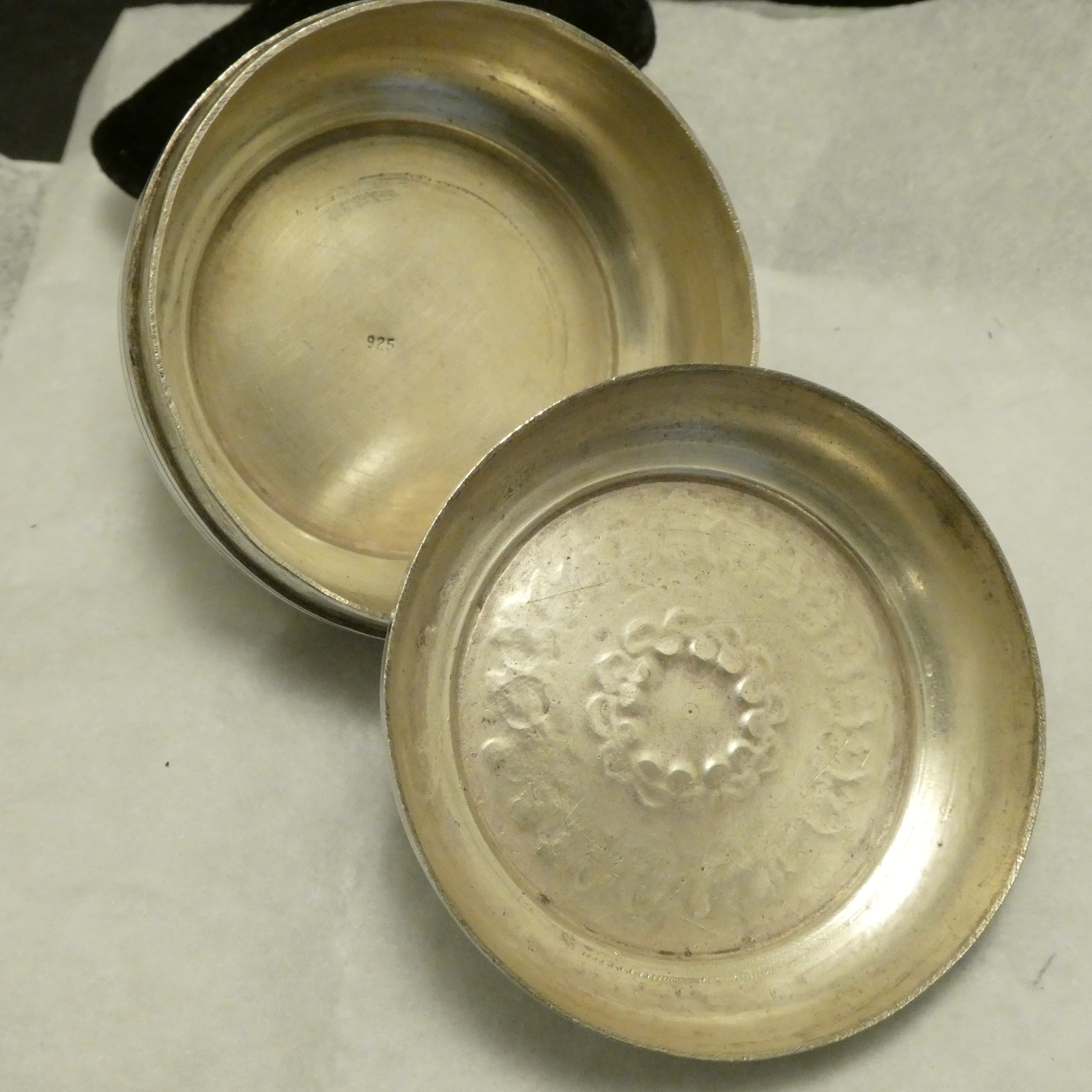
On the floor of the inside of the above Silver Container 925 is stamped, which is not exactly true, for given the 91.6% Silver purity of the Silver Rupees used in its making, the stamp should have stated 916.
The British government devalued and debased the Silver coinage of India in 1936, but so much of the coinage had been collected and stored away as wealth that even today, ninety years on from the devaluation, pre-1936 Silver Rupee coinage may be easily purchased at whatever the current world Silver price might be.
Naturally, some of this currency attracts a higher-than-face-value price; coinage depicting the Empress Victoria in mint or good condition, for example, attracts a premium above a George V.