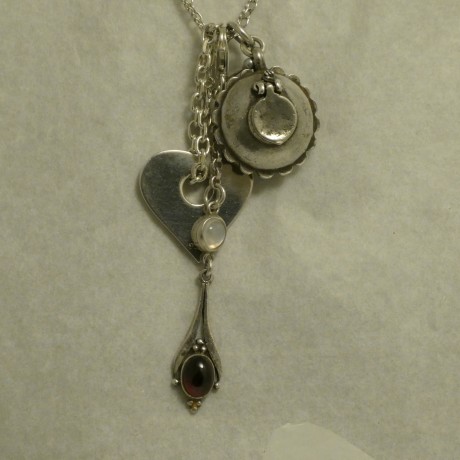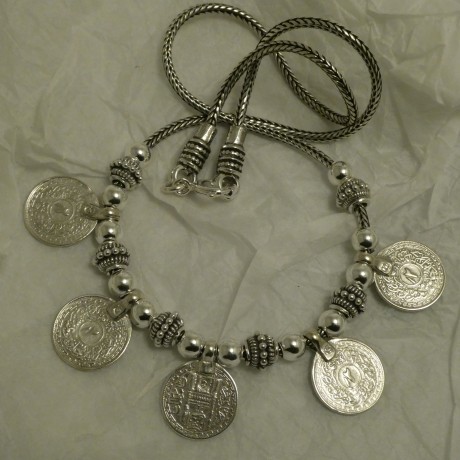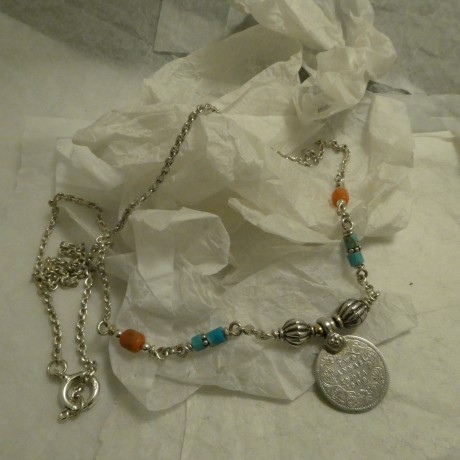

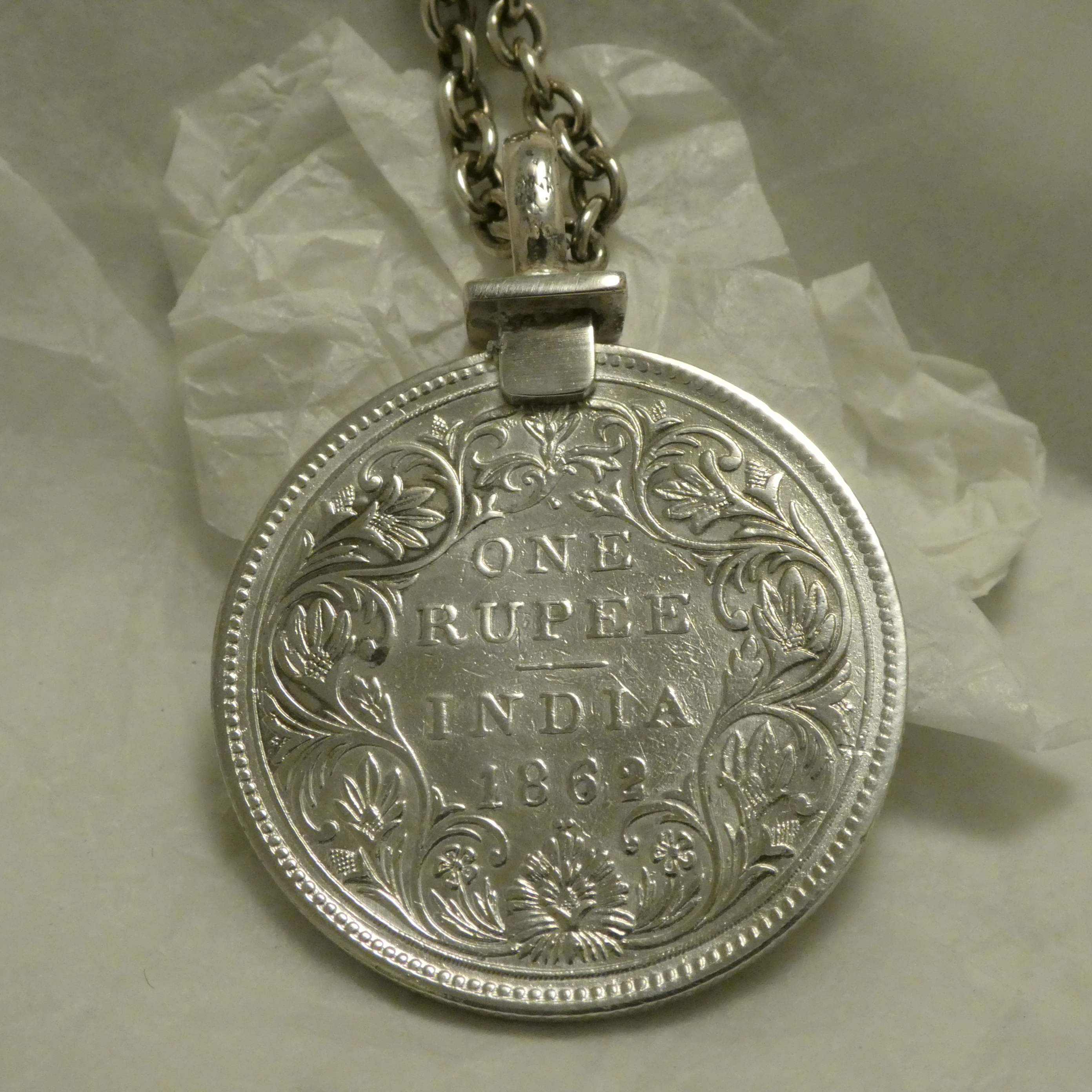
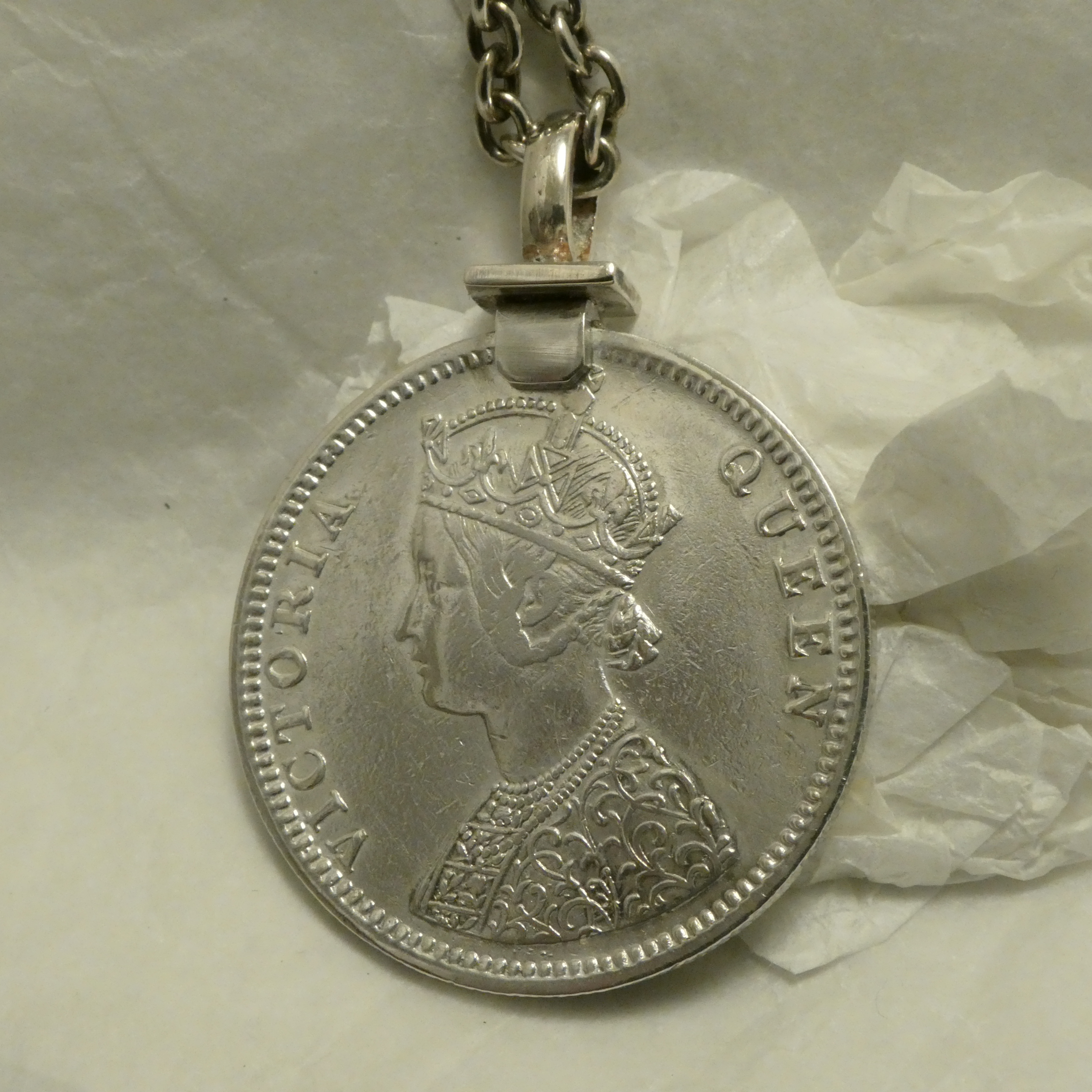
1862 Victoria Rupee coin pendant, high Silver content 90% +, the very solid bale fitting handcrafted in Sydney in Sterling Silver.
These 30mm wide Silver Rupee coins were minted by the British in India under very controlled conditions, the Silver always 90% +, the weight exactly one tola, an ancient Indian weight standard; this coin underpinned the enterprise of the British in India, used as a store of wealth and also in necklaces of ten or twelve such coins, adornments of wealth and prestige.
The above 1862 Victoria Rupee is a “Victoria Queen” Rupee. London took over the governing of India from the British East India Company in 1858, and in 1861 began minting the above coin, beginning the process of phasing out the East India Company coinage. The above coin was minted to 1876, when Victoria was proclaimed “Empress”, and from 1877 the Rupee was marked “Victoria Empress” rather than “Victoria Queen”.
Interesting to note that throughout all these changes, the Rupee was always scrupulously kept at 91.6% Silver purity and one tolah in weight (11.66 grams).
The bail for the chain for the above Rupee pendant is nicely handmade in Sydney, in a style taken directly from an ancient Seljuk Silver pendant. (The Seljuks were Turkic, ruling vast swathes of Central Asia and the Middle East from the 11th to the 14th centuries.)