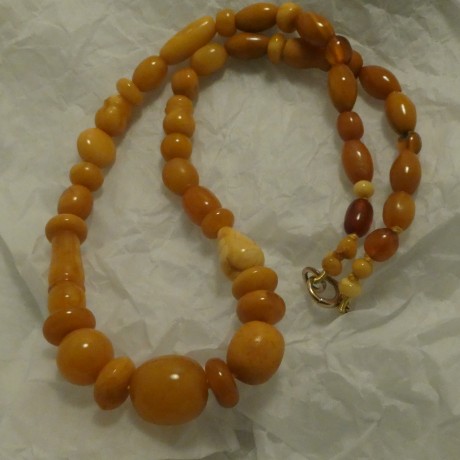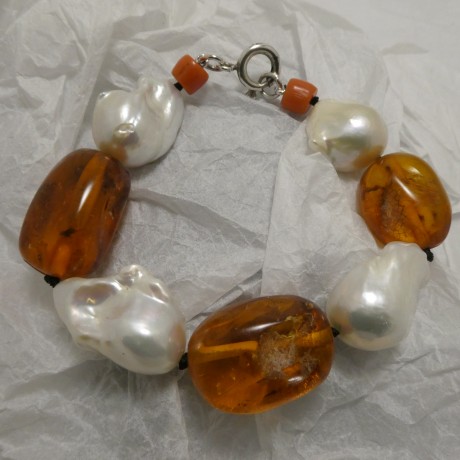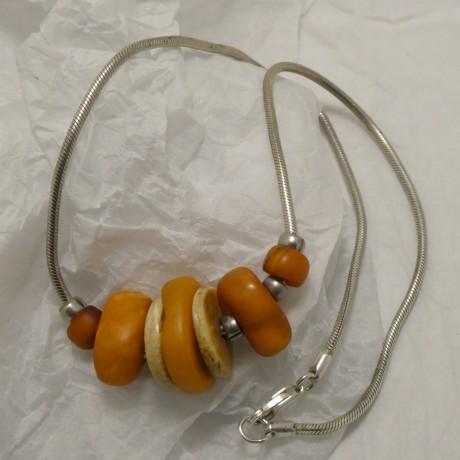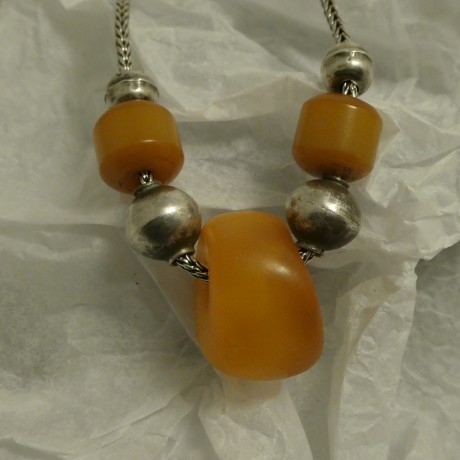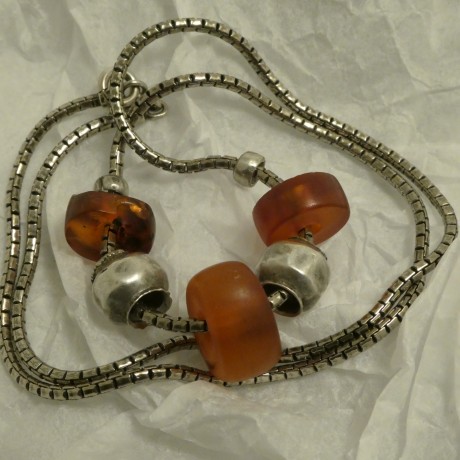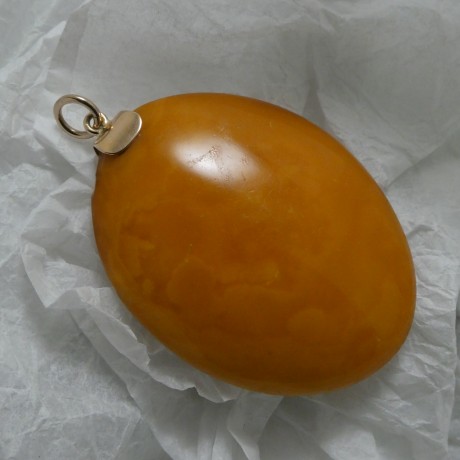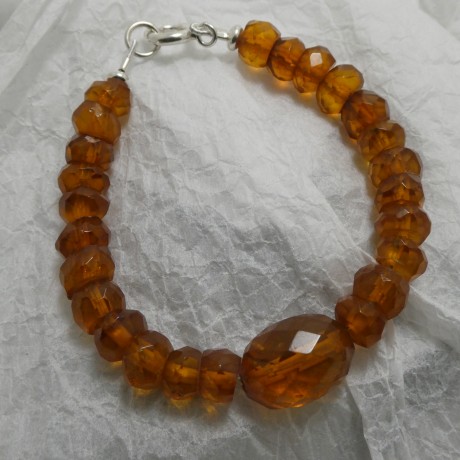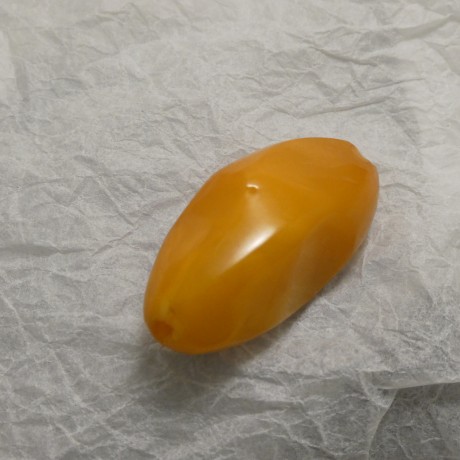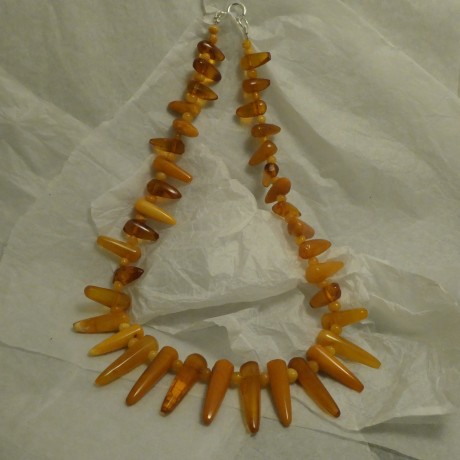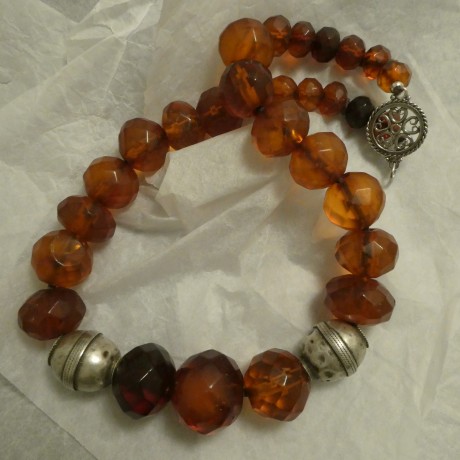
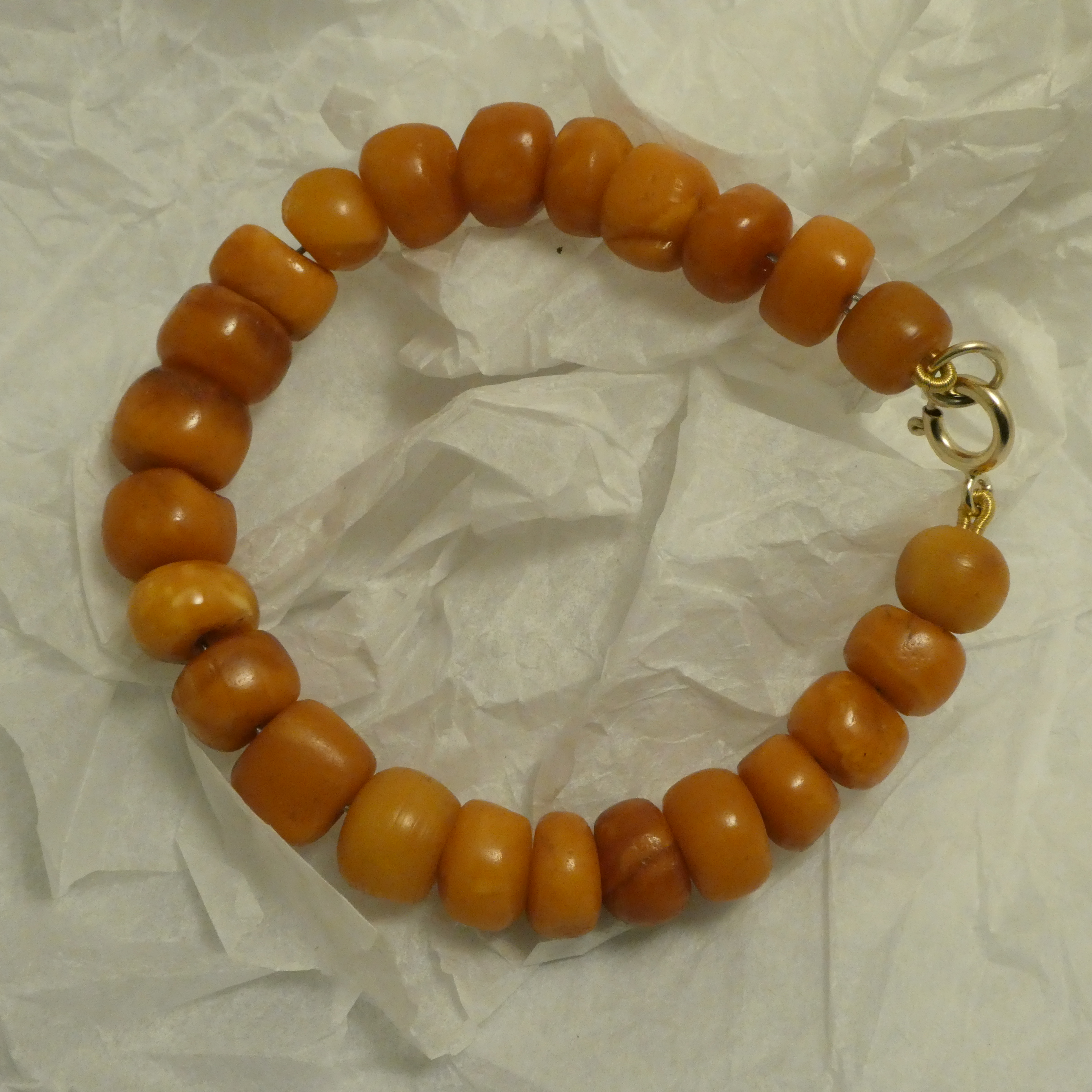
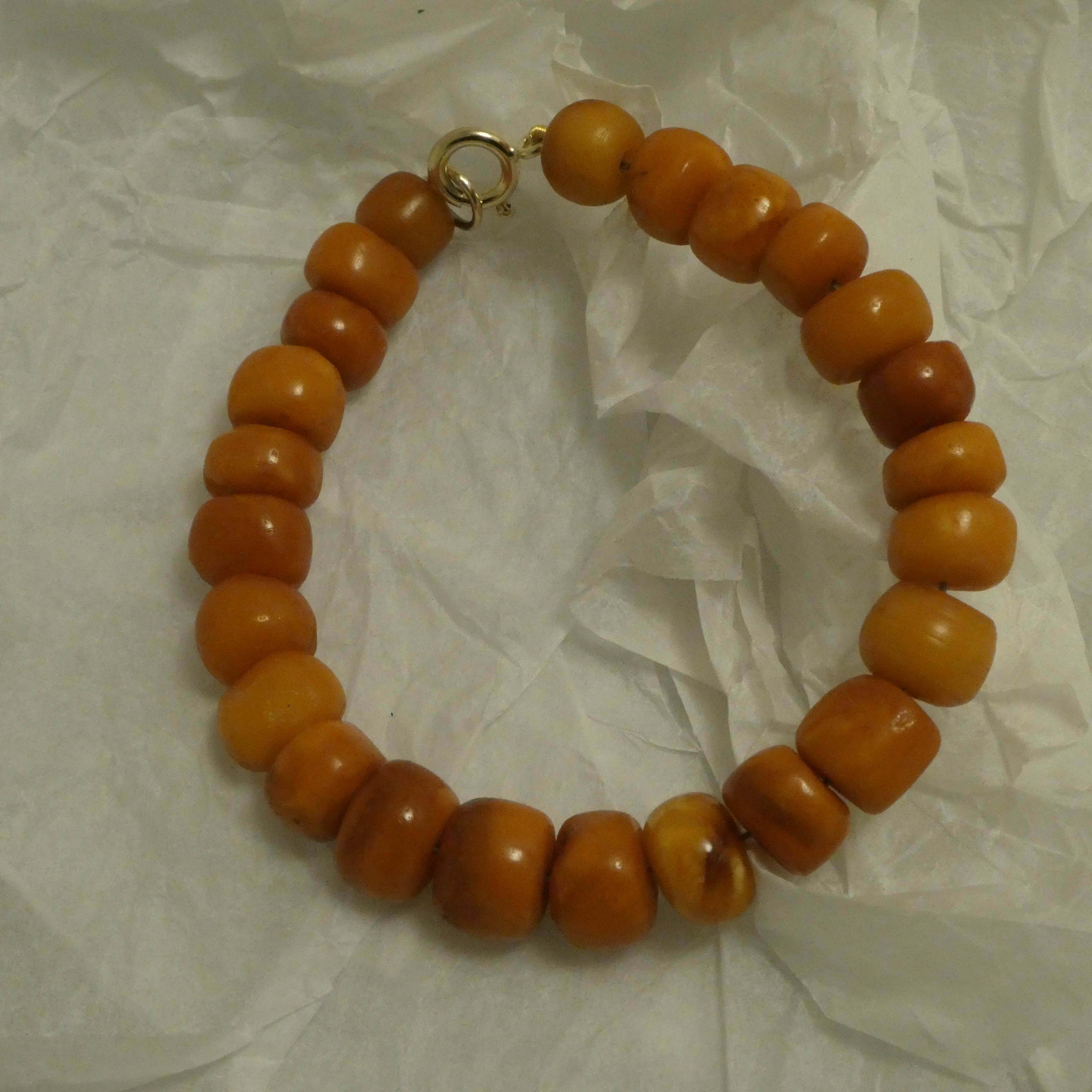
Amber Bracelet of old tribal butterscotch colour, handcut, native cut beads dating back to the mid-1900s or earlier. The origin of the opaque butterscotch Amber is definitely the Baltic Sea region. Exactly where these beads were handcut and used is not known. The opaque butterscotch material of the above Amber Bracelet has been traded and treasured across the entirety of North Africa for centuries, and in Tibet for possibly as long.
There is a strong possibility that the beads were handcut for use in a bead necklace created in Yemen a half-century ago or more, for back in the 1970s/1980s butterscotch Baltic Amber of the look, size and native cut of those in the above Amber Bracelet came onto the market in some sort of quantity.
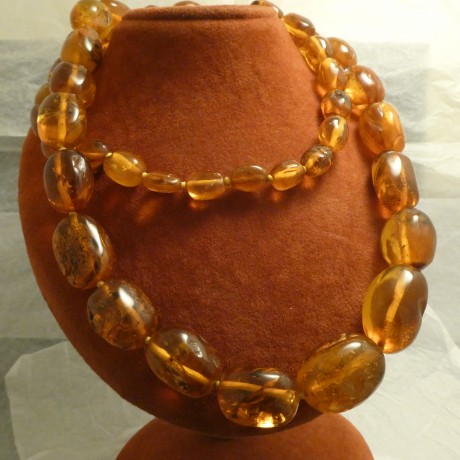
The type of opaque butterscotch Amber in the above Amber Bracelet only comes from the Baltic. Baltic Amber can be honey-coloured or yellow, or a mix of both. This opaque yellow Amber appealed not only to Tibetans and the Tribals of North Africa, it was also much appreciated in Victorian England, in the form of long strands of lovely graduated ovoid beads of matched gorgeous yellow.
Since the early 2000s Tibetans and Chinese have been the biggest customers world-wide for yellow Baltic Amber, especially for old native-cut beads such as in the above Amber Bracelet. Beads such as these have now become increasingly rare.